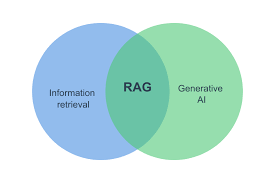
Large Language Models (LLMs) like GPT-4, Claude, and Llama have revolutionized how we interact with AI. However, they come with a fundamental limitation: their knowledge is frozen at the time of training. Enter Retrieval-Augmented Generation (RAG) - a paradigm that combines the power of LLMs with real-time information retrieval, enabling AI systems to access and reason over external knowledge bases.
At the heart of modern RAG systems lies vector databases - specialized storage systems designed to handle high-dimensional embeddings efficiently. This combination has become the backbone of enterprise AI applications, from intelligent chatbots to semantic search engines.
Retrieval-Augmented Generation is an architecture pattern that enhances LLM responses by retrieving relevant context from external sources before generating an answer. Instead of relying solely on the model's parametric knowledge (what it learned during training), RAG allows the model to access up-to-date, domain-specific information.
The RAG pipeline typically follows these steps:
1. Document Ingestion: Your knowledge base (documents, PDFs, web pages) is split into chunks and converted into vector embeddings using models like OpenAI's text-embedding-ada-002 or open-source alternatives like sentence-transformers.
2. Storage: These embeddings are stored in a vector database along with their original text content.
3. Retrieval: When a user asks a question, it's converted to an embedding and used to find semantically similar chunks from the database.
4. Generation: The retrieved context is injected into the LLM's prompt, enabling it to generate accurate, grounded responses.
Traditional databases excel at exact matches and structured queries, but they struggle with semantic similarity. Vector databases are purpose-built to solve this problem using Approximate Nearest Neighbor (ANN) algorithms like HNSW, IVF, and ScaNN.
Popular vector database options include:
Pinecone: A fully managed, cloud-native vector database with excellent scalability and minimal operational overhead.
ChromaDB: An open-source, developer-friendly option perfect for prototyping and smaller deployments.
Weaviate: Offers hybrid search combining vector and keyword search with built-in ML model inference.
Milvus: A highly scalable open-source solution designed for billion-scale vector similarity search.
pgvector: A PostgreSQL extension that brings vector search capabilities to your existing Postgres infrastructure.
RAG addresses several critical limitations of standalone LLMs:
Reduced Hallucinations: By grounding responses in retrieved facts, RAG significantly reduces the tendency of LLMs to generate plausible but incorrect information.
Up-to-date Information: Your AI can access the latest data without requiring expensive model retraining.
Domain Specificity: Easily adapt general-purpose LLMs to your specific use case by connecting them to proprietary knowledge bases.
Transparency: RAG systems can cite their sources, making responses verifiable and building user trust.
Cost Efficiency: Instead of fine-tuning massive models, you can achieve similar results by intelligently retrieving and injecting context.
The RAG ecosystem is evolving rapidly. Advanced techniques like HyDE (Hypothetical Document Embeddings), multi-hop retrieval, and agentic RAG are pushing the boundaries of what's possible. As embedding models improve and vector databases become more sophisticated, we can expect RAG systems to become even more accurate and efficient.
Whether you're building a customer support bot, a code assistant, or an enterprise search solution, understanding RAG and vector databases is becoming essential knowledge for any AI practitioner. The future of AI isn't just about bigger models - it's about smarter architectures that know when and how to retrieve the right information.